India
- Karen Darnell

- May 8, 2021
- 5 min read
I love the learning I experience when someone questions what I think I know. On our recent long drive to NorCal, Kaitlin’s friend Human asked if there is a word that encompasses the shared cuisine of India, Pakistan, and Bangladesh. I texted Hina (with her Pakistani heritage, she would know) and she replied that South Asian cuisine can be separated into South Indian, North Indian/Pakistani, and Bengali cuisine. Indian food has subcategories? This inspired a trip to Little India to experience the difference.
Gladys, Phyllis, Lynn and I met in Artesia last Friday to figure it out. A helpful Indian American man who has lived here for the last fifty years (he arrived when Artesia was full of dairies and cows) explained some of the items included with North Indian and South Indian food. He also told us which restaurants serve each and suggested eating paan (a leaf filled with seeds and spices) after the meal for digestion.
We picked up the sweet paan at Ambala Cash and Carry – there is so much in this store that I’ve not experienced before! To represent South Indian cuisine, we tried paper masala dosa and butter masala dosa at Chennai Dosa Corner. Dosa is like a gigantic crepe with various fillings. It is served with various chutneys. Both of the dosas we tried are delicious and the coconut chutney is my favorite. Eating paan after the meal freshens the mouth with flavors similar to mint.
Then we wandered through the many shops both because the clothing and jewelry are beautiful, and also to allow time before we ate more! When we were ready for North Indian food, we went to Ashoka the Great for butter chicken, saag paneer (spinach and cheese), garlic naan, and kheer (pistachio rice pudding). I have eaten a lot of Indian food in my life because it is one of my favorite cuisines. The food at Ashoka the Great is some of the best.
To finish off the day, we tried the burfi and peda (Indian milk fudge) at Jay Bharat Sweets Cafe and pineapple cream cake and mango ice cream bars at the larger of the two Pioneer Markets.
I learned when I took a cooking class on Indian cuisine at Cooking Block in Redlands, that this food can take a lot of time and has complicated preparation steps, so I found a webpage with easy-to-cook Indian recipes for beginners: https://www.thespruceeats.com/indian-recipes-for-beginners-1957888. If you want to learn more about Indian spices, Kanopy has a video on “India: The Heart of the Spice World” as the first of The Everyday Gourmet series. Kanopy also has a series on Food: A Cultural Culinary History in which episode 7 is on India.
Besides Little India and experiencing the food, a second way to travel to India while staying in the Los Angeles area is to visit the Bhagavad-gita Museum and learn more about the Hindu sacred text. I went with Gladys and Joanie. Just so you know, you can only go through as fast as the program will allow and it takes 45 minutes. The dioramas are detailed and beautiful, and the narration gives the meaning. You can find the Bhagavad-gita at https://www.gutenberg.org/files/2388/2388-h/2388-h.htm
A less structured experience with Indian spirituality is the Self Realization Fellowship Lake Shrine in Pacific Palisades. Lidia took Gladys and me there and we experienced a lovely afternoon. The least structured and most fun experience I’ve had with Indian spirituality is participating in the Holi-festival in Riverside with Kristen and Christy a few years ago.
This blog however was specifically started to entertain my mother during the pandemic, so let’s talk about traveling to India while staying at home. There are many movies and here is one of the really fun ones! All those times my children watched Bride and Prejudice while growing up, I might have stopped for a minute to see a dance scene, but I never saw it all the way through, so I watched it last night and enjoyed both the Bollywood style and the rewrite of Jane Austin’s story. Mom, you would like this one: https://www.crackle.com/watch/7577/2516624
In addition, Hulu has Hotel Mumbai, an action thiller. DisneyPlus has several videos on India due to their National Geographic partnership. These include one of the episodes of Gordon Ramsey Uncharted as well as the documentaries India's Wild Leopards, India from Above, Wild Cats of India, and Secrets of Wild India. Netflix has Never Have I Ever, inspired by Mindy Kaling’s childhood as a first generation Indian American and also many Hindi movies. Here’s a list by someone who knows more than me: https://www.androidauthority.com/netflix-hindi-movies-1002403/. I intend to watch Chopsticks on Netflix when I get a chance. I also intend to watch The Family Man on Amazon Prime. The BBC called it the anti-James Bond because it is about a secret government agent who checks in with his family.
There are so many books from which to choose from India, from the diaspora, and from the point of view of the British colonizers. My book group read A Place for Us by Fatima Farheen Mirza and The Henna Artist by Alka Joshi. I read The Henna Artist on Overdrive online through my library and Alka Joshi has a blog about marriage and caste in India: https://thehennaartist.com/. Another book I read, A Passage to India by E. M. Forster, has stuck with me for years due to one comment by Fielding, “I'd far rather leave a thought behind me than a child.” Does anyone want to have a conversation about this? I could talk for hours! A Passage to India can be found at: https://www.gutenberg.org/ebooks/61221
For more books, Rudyard Kipling, who was born in India and based many of his stories there, is well represented on Project Gutenberg, including my favorite of his stories, The Jungle Book: https://www.gutenberg.org/ebooks/search/?query=kipling&submit_search=Go%21
Since I had read all of these books previously, to learn something more for this blog, I listened to Gandhi and Churchill by Arthur Herman on CD from the San Bernardino County Library. I also scanned the works translated from Hindi on Words without Borders to learn something more about Indian literature: https://www.wordswithoutborders.org/find/languages/hindi
To learn more about the history of ancient India, start with the Indus River Valley civilizations video here. This will start a series of additional videos and articles: https://www.khanacademy.org/humanities/world-history/world-history-beginnings/ancient-india/v/indus-valley-civilization
If you just want to walk around, Google has many street view options. Move your mouse or click in the direction you want to go to walk through whichever Indian monument you select: https://artsandculture.google.com/search/streetview?hl=en
The best thing about India, of course, are the people. I appreciate Allan’s lifelong friend Atam and my colleagues Abhi and Tina for sharing their thoughts and personalities with me. You have enriched my ideas about India and enriched my life through knowing you as individuals.
If you are daydreaming about an actual trip to India, https://www.thecrazytourist.com/15-best-places-visit-india/ can help you get specific about what to see. You might know that this isn’t a good time to go. India is suffering right now. If you want to help, there are some ideas of how:
After India recovers, your local travel advisor can help plan a great trip! Shout out to my favorite travel advisor, Kaitlin Darnell at Laura's Travel in Redlands. May the travel industry survive and thrive. May we all survive, thrive, recognize our mutual humanity, learn to deal with our conflicts, and allow peace and health to flourish in India and throughout the world.
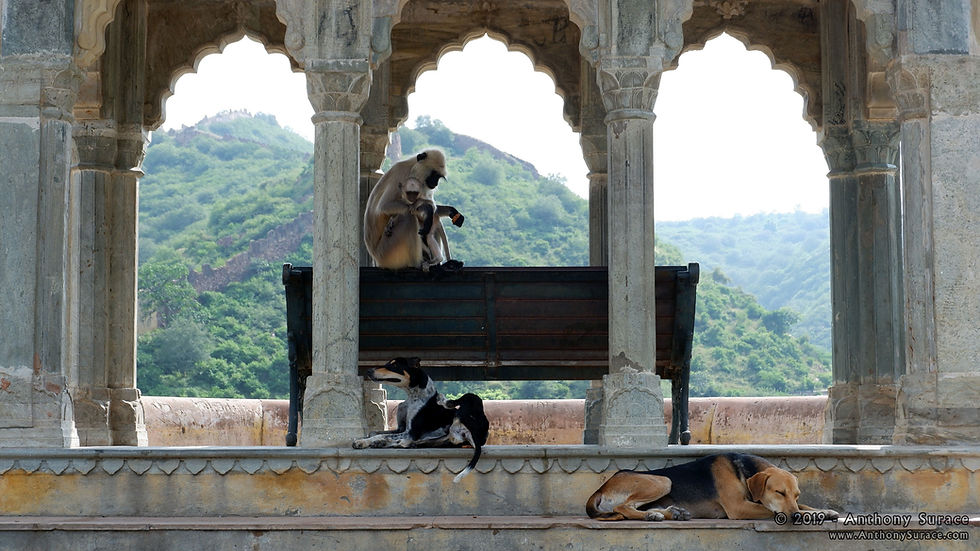
Photo Credit: Anthony Surace https://www.flickr.com/photos/anthonysurace/48886489502/


Comments